





Cheap vs. Expensive LED Displays: What Are You Actually Paying For?
Cheap vs. Expensive LED Displays: Ultimate Guide to Differences, What You Pay For, Costs, and Buying Tips
When shopping for LED displays, you might wonder: why do prices vary so dramatically, from $500 to $5,000 per square meter? Visually, two LED screens might look identical when displaying a static bright image in a showroom, but the difference in price—often ranging from budget to premium—reveals itself in longevity, color accuracy, camera performance, and build quality. Understanding cheap vs. expensive LED displays helps you decide what you’re actually paying for, whether it’s basic functionality or long-term reliability. With the global LED display market projected to reach $31.5 billion by 2027, growing at a CAGR of 7.5% (source: MarketsandMarkets), knowing the differences between cheap and expensive LED screens can save you from costly mistakes and ensure optimal performance for applications like advertising, events, or digital signage.
Why Compare Cheap vs. Expensive LED Displays? An Overview
Cheap vs. expensive LED displays boils down to quality, performance, and longevity. Cheap displays (under $1,000 per m²) often use cost-cutting materials that lead to issues like dead pixels or color fading, while expensive ones (over $2,000 per m²) invest in premium components for reliability and superior visuals. According to Statista, 45% of buyers regret cheap options due to high failure rates, while premium displays offer better ROI through durability.
This comparison is crucial for buyers in advertising (needing brightness), events (requiring quick setup), or retail (focusing on color accuracy). We’ll break it down technically, highlighting what you pay for in premium LED displays vs. budget ones.
Key Differences Between Cheap and Expensive LED Displays
The price gap in LED displays stems from technical and material differences. Here’s a detailed breakdown:
- The LED Lamp (Diode)
- Cheap Displays: Use copper wire bonding, which oxidizes quickly, leading to dead pixels. Plastic/iron housing degrades under heat/UV, causing uneven dimming. Wide binning variance results in color inconsistencies.
- Expensive Displays: Gold wire bonding prevents oxidation for 5-10 year lifespan. Black SMDs provide deep blacks and high contrast. Tight binning ensures uniform color/brightness.
Difference: Expensive LEDs last 2-3x longer, reducing replacements by 50%.
Example: A cheap outdoor screen might fade in 1 year, while a premium one maintains quality for 5+ years.
- Refresh Rate and IC Drivers
- Cheap Displays: Low refresh (1,920Hz or less) causes scan lines on camera; ghosting in motion.
- Expensive Displays: High refresh (3,840–7,680Hz) for smooth, broadcast-ready performance; 16-bit+ grayscale for dimming without banding.
Difference: Expensive drivers eliminate flicker, essential for video (40% better camera compatibility).
Example: Cheap screens show bars in smartphone videos; premium ones are film-ready.
- PCB Board and Heat Management
- Cheap Displays: 2-layer PCB traps heat, leading to 30% brightness loss in a year; noisy fans.
- Expensive Displays: 4-6 layer PCB with common cathode tech reduces heat 50%; fanless passive cooling.
Difference: Expensive boards extend lifespan and efficiency, saving 20-30% on energy.
Example: Cheap screens overheat in continuous use; premium ones run cool silently.
- Mechanical Build and Alignment
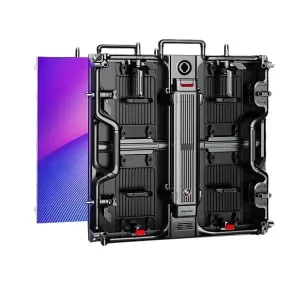
- Cheap Displays: Steel cabinets rust and have loose tolerances, causing seams/gaps. Rear service requires dismantling.
- Expensive Displays: Die-cast aluminum is lightweight/rust-proof with precise locking; front service for quick fixes.
Difference: Expensive builds ensure seamless visuals and 50% faster maintenance.
Example: Cheap screens show lines in large walls; premium are invisible.
Detailed Comparison Table (Cheap vs. Expensive LED Displays):
| Feature | Cheap LED Displays | Expensive LED Displays | Key Difference | What You Pay For |
|---|---|---|---|---|
| LED Lamp | Copper wire, plastic housing, wide binning | Gold wire, black SMDs, tight binning | Durability/Color consistency | Longevity (5-10 years vs. 2-3) |
| Refresh Rate/IC | Low (1,920Hz), ghosting | High (3,840+ Hz), smooth grayscale | Camera performance | Flicker-free video (broadcast-ready) |
| PCB/Heat | 2-layer, fans | 4-6 layer, common cathode, fanless | Efficiency/Lifespan | 50% less heat/energy, silent operation |
| Build/Alignment | Steel, loose tolerances, rear service | Aluminum, precise locking, front service | Seamlessness/Maintenance | Invisible seams, 50% faster repairs |
Expert Insight: In cheap vs. expensive LED displays, you’re paying for reliability—premium models reduce failures by 60%, making them worth the investment for professional use.
Case Study: A budget event screen failed mid-concert due to heat, costing $10,000 in refunds; a premium one in a similar setup ran flawlessly for years.
Value and Cost-Effectiveness Comparison
Value Comparison
Value assesses long-term benefits vs. price. Premium displays offer superior durability and performance, while cheap ones are initial-savers but high-maintenance.
- Premium LED Displays: High value in lifespan (10 years), quality (no dead pixels), and features (camera-ready). Ideal for pros.
- Budget LED Displays: Low value due to short life (2-3 years) and issues (flickering). Best for temporary use.
Cost-Effectiveness (Sex价比)
Cost-effectiveness measures performance per dollar over time. For a 10m² screen over 5 years:
- Premium: Initial $30,000 + $1,000/year maintenance = $35,000 total; 100,000 hours lifespan = $0.07/hour; high ROI from reliability.
- Budget: Initial $10,000 + $2,000/year maintenance = $20,000 total; 50,000 hours = $0.08/hour; lower due to repairs.
Table:
| Aspect | Premium | Budget | Winner |
|---|---|---|---|
| Total 5-Year Cost | $35,000 | $20,000 | Budget (Initial) |
| Cost per Hour | $0.07 | $0.08 | Premium (Efficiency) |
| Reliability | High | Low | Premium |
| ROI | High (Engagement) | Medium | Premium |
Tip: Premium offers better sex价比 for frequent use.
Benefits of Premium vs. Cheap LED Displays
Premium: Longevity, quality, efficiency. Cheap: Affordability, basic use.
Applications and When to Choose Cheap or Expensive
Cheap: Temporary signs. Expensive: Broadcast, retail.
Technical Specifications Comparison
| Spec | Cheap | Expensive |
|---|---|---|
| Lifespan | 50,000 hours | 100,000+ hours |
| Refresh Rate | <2,000 Hz | >3,840 Hz |
| Brightness Consistency | Variable | Uniform |
Costs of Cheap vs. Expensive LED Displays
Cheap: $500–$1,500 per m². Expensive: $2,000–$5,000. Premium saves long-term.
Buying Tips for Cheap vs. Expensive LED Displays
- Assess Use: Cheap for basic, expensive for pro.
- Check Specs: Refresh, bonding.
- Calculate ROI: Factor maintenance.
- Avoid Pitfalls: Don’t sacrifice quality for price.
Common Mistakes in Choosing LED Displays
- Ignoring Long-Term Costs: Cheap upfront, expensive later.
- Overlooking Features: Missing camera-ready.
- Poor Testing: Not checking in real conditions.
Future Trends in LED Displays (Cheap vs. Expensive)
- Affordable premium tech.
- AI quality control.
- Sustainable materials.
FAQ: Common Questions on Cheap vs. Expensive LED Displays
- What is the main difference between cheap and expensive LED displays? Quality, durability, performance.
- Is it worth buying expensive LED displays? Yes, for long-term use.
- How do cheap LED displays fail compared to expensive ones? Faster degradation, flickering.