





LED Video Wall Price Breakdown
LED Video Wall Price Breakdown: Hidden Costs You Should Know
Investing in an LED video wall is a significant decision for any business, whether for a retail storefront, a house of worship, a corporate lobby, or an outdoor billboard. However, a common mistake many buyers make is looking only at the “price per square meter” of the LED panels themselves.
The reality is that the panels often account for only 60-70% of the total project cost. To ensure your project stays on budget and launches successfully, you need to understand the Total Cost of Ownership (TCO).
In this guide, we break down the anatomy of LED video wall pricing and reveal the hidden costs that most quotes don’t initially show. 
1. The Base Cost: Pixel Pitch and Specifications
The most obvious cost is the hardware. However, even here, price variations can be drastic based on specs:
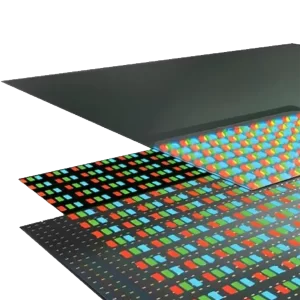
- Pixel Pitch: The distance between pixels (e.g., P0.7, P0.9, P1.2, P2.5, P10). A smaller pitch (P0.7) offers higher resolution but requires more LED diodes, significantly increasing the price.
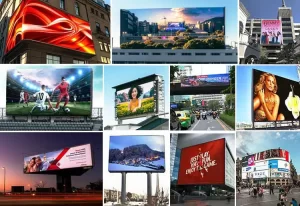
- Indoor vs. Outdoor: Outdoor screens require high brightness (5,000+ nits) and IP65 weatherproofing, which adds to the manufacturing cost compared to standard indoor screens.
Hidden Factor: The “Batch” Reserve. You should always purchase 3-5% more modules than you need as spare parts. LED batches vary slightly in color; if you buy spares years later, they won’t match your screen. This is an upfront cost you must include.
2. Structural Framework and Installation
You cannot simply hang an LED wall like a painting. These displays are heavy and require precise alignment.
- Steel Structure: Whether it’s a ground-standing pole or a wall-mounted frame, you need a custom steel structure. For outdoor screens, this requires engineering calculations to withstand wind loads.
- Labor: Professional installation requires certified technicians. This includes the cost of scissor lifts, cranes (for outdoor), and electrical wiring.
- Cladding/Trim: Once the screen is up, you need aesthetic cladding (aluminum or composite) to hide the cables and steel frame on the sides and back.
3. Video Processors and Control Systems
The LED panels are just the canvas; the video processor is the brain.
- Sending Boxes/Cards: These hardware components transmit the signal from your computer to the screen.
- Video Scalers: If you plan to switch between multiple inputs (cameras, laptops, media players) or display 4K content on a non-4K screen, you need a high-end video processor.
- Cost Impact: A basic controller might cost $500, while a professional 4K processor with low latency can cost upwards of $5,000 to $10,000.
4. Electrical Infrastructure and Power Consumption
This is the most overlooked long-term cost.
- Infrastructure Upgrades: Does your building have the electrical capacity to run a massive screen? You may need to install new breaker panels or run 3-phase power to the location.
- Running Costs: LED walls are energy efficient, but they still consume power. An outdoor billboard running 24/7 will have a significant impact on your monthly utility bill.
- Pro Tip: Ask manufacturers like REISSDISPLAY for “Common Cathode” technology, which can reduce heat and power consumption by up to 30%.

5. Logistics, Shipping, and Taxes
Most professional LED components are manufactured in specialized hubs.
- Shipping: Air freight is fast but expensive; sea freight is cheaper but takes weeks.
- Duties and Tariffs: Depending on your country, importing LED electronics can incur customs duties ranging from 0% to 25%.
- Last-Mile Delivery: Getting the crates from the port to your specific installation site (especially if it’s on the 10th floor or a remote highway) adds logistics fees.
6. Content Management Systems (CMS)
A blank screen offers no ROI. You need software to schedule and manage your content.
- Software Licensing: Some controllers come with free software, but enterprise-level cloud management (allowing you to change content remotely) often requires a monthly or annual subscription.
- Content Creation: Do not underestimate the cost of hiring designers to create high-resolution video content that fits your screen’s specific aspect ratio.
7. Maintenance and Calibration
While LEDs are durable, they are not immortal.
- Routine Maintenance: Outdoor screens need cleaning to remove dust and pollution that obscures brightness.
- Pixel Repair: Over time, individual pixels may fail (dead pixels). While you have spare modules, you may eventually need a technician to swap them out or solder new diodes.
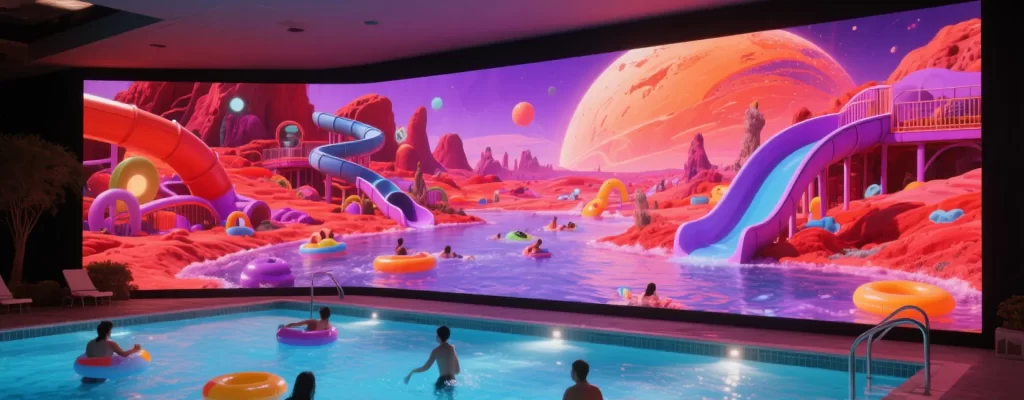
led wall
Summary: The “Iceberg” of LED Pricing
When budgeting, use this rough formula:
- LED Panels: 60% of budget
- Structure & Installation: 20% of budget
- Control System & Power: 10% of budget
- Logistics & Spares: 10% of budget
Why Transparency Matters
At REISSDISPLAY, we believe in “No Surprise” pricing. When we provide a quote, we help you calculate the Total Cost of Ownership. We advise you on the necessary spare parts, the power requirements, and the best installation methods to prevent future headaches.
Don’t let hidden costs derail your project. Contact REISSDISPLAY today for a transparent, itemized quote that covers everything from the pixel to the power plug.