





LED Walls for Virtual Production: Revolutionizing Filmmaking
LED Walls for Virtual Production: Ultimate Guide to Technology, Benefits, Costs, and How They Revolutionize Filmmaking
LED walls for virtual production represent a groundbreaking shift in filmmaking, allowing creators to build immersive, real-time 3D environments that actors can interact with directly on set. Popularized by shows like Disney’s The Mandalorian, these massive LED screens—often called LED volumes—surround performers with dynamic backgrounds, capturing visual effects in-camera rather than relying on post-production. With the global virtual production market projected to reach $5.1 billion by 2026, growing at a CAGR of 25.3% (source: MarketsandMarkets), LED walls for virtual production are revolutionizing workflows, reducing costs by up to 30%, and enabling more creative freedom (per AVIXA studies).

What Is an LED Wall for Virtual Production?
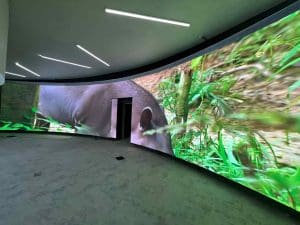
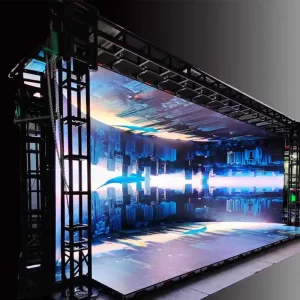
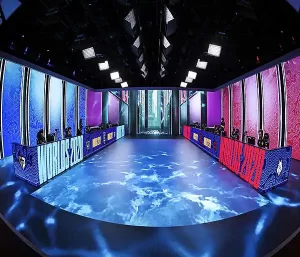
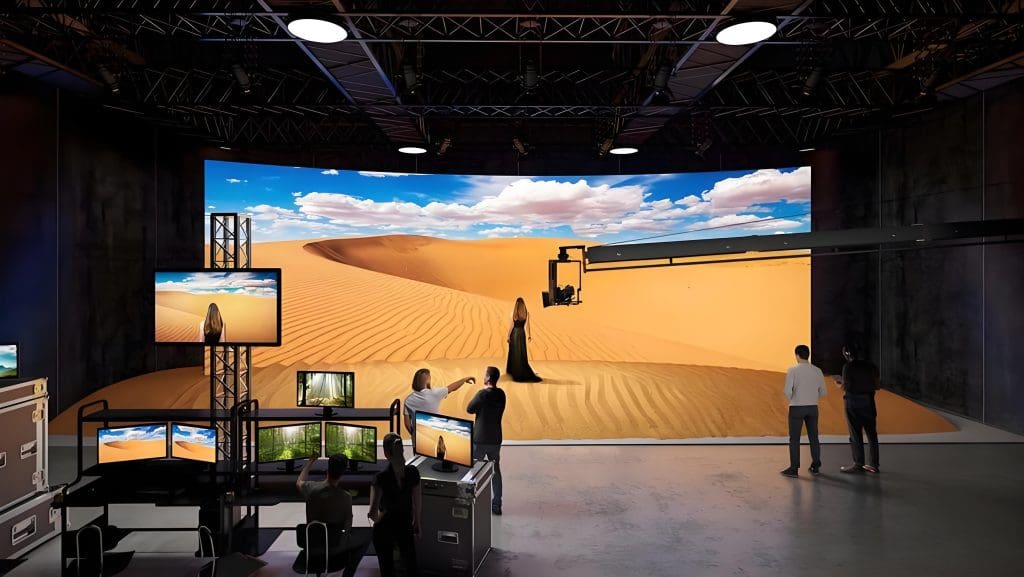
An LED wall for virtual production is a large-scale, high-resolution LED display system used to create real-time 3D environments on film sets. Often configured as a curved “volume” (180-360 degrees) with an LED ceiling, these walls are powered by game engines like Unreal Engine or Unity to render photorealistic scenes that sync with camera movements. Unlike static backdrops, LED walls for virtual production use camera tracking to adjust perspectives in real-time, creating parallax effects that make digital elements appear as part of the physical world.
The technology eliminates many limitations of traditional methods, allowing actors to see and react to their surroundings. According to Statista, 60% of major film productions now incorporate virtual production, with LED walls reducing post-production time by 40%. For example, The Mandalorian used a 20-foot-tall, 75-foot-diameter LED volume to film spaceship scenes, capturing effects in-camera and saving months of VFX work.
These walls are not just screens—they’re interactive sets that blend physical and digital filmmaking.
Types of LED Walls for Virtual Production
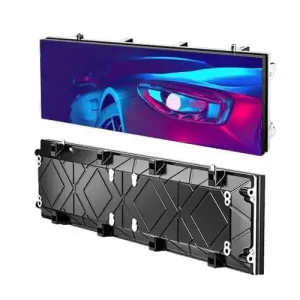
LED walls for virtual production vary by size, configuration, and features. Here’s a detailed breakdown:
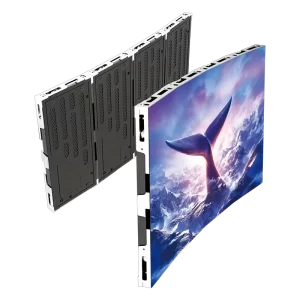
- Curved LED Volumes
Description: Semi-circular or full-circle walls with ceiling panels.
Features: 180-360 degree immersion; high res for close shots.
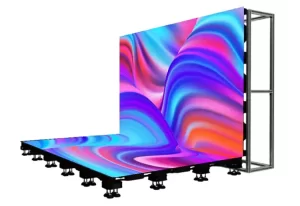
Best For: Sci-fi films with expansive environments. - Flat LED Walls
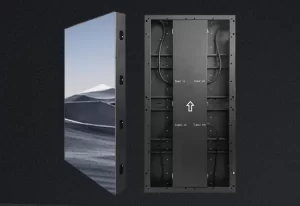
Description: Large planar screens for backgrounds.
Features: Easier setup; modular for expansion.
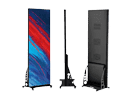
Best For: Budget productions or specific scenes. - Portable LED Walls
Description: Modular, transportable panels.
Features: Quick assembly; lightweight.
Best For: Location shoots or small studios. - High-Resolution LED Walls
Description: Fine-pitch panels for 4K/8K.
Features: Pixel pitches <P1.5; anti-moiré tech.
Best For: Detailed VFX. - Interactive LED Walls
Description: Touch or sensor-enabled.
Features: Real-time actor interaction.
Best For: Gaming or AR films. - Outdoor-Capable LED Walls
Description: Weatherproof with high brightness.
Features: IP65+; 5,000+ nits.
Best For: Exterior scenes.
| Type | Configuration | Pixel Pitch | Brightness (Nits) | Ideal Applications | Average Cost (USD) |
|---|---|---|---|---|---|
| Curved LED Volume | 180-360° | P1.5–P2.6 | 1,000–1,500 | Film Sets | $500,000–$2M+ |
| Flat LED Wall | Planar | P1.8–P3 | 800–1,200 | Studios | $100,000–$500,000 |
| Portable LED Wall | Modular | P2–P4 | 800–1,200 | Locations | $50,000–$200,000 |
| High-Resolution LED Wall | Fine-Pitch | <P1.5 | 1,000–1,500 | VFX Heavy | $300,000–$1M |
| Interactive LED Wall | Sensor-Enabled | P1.8–P2.5 | 1,000–1,500 | AR Productions | $200,000–$800,000 |
| Outdoor-Capable LED Wall | Weatherproof | P2.5–P4 | 3,000–5,000 | Exterior Shoots | $150,000–$600,000 |
Key Features of LED Walls for Virtual Production
- High Resolution and Pixel Pitch: P1.5–P2.6 to avoid moiré.
- Refresh Rate: 3,840–7,680 Hz for flicker-free camera capture.
- Brightness and HDR: 1,000–1,500 nits with 10-12 bit color for realistic lighting.
- Black Body LEDs: Deep blacks and high contrast.
- Camera Tracking Integration: Compatible with Mo-Sys or OptiTrack.
- Processing Power: Brompton or Novastar for real-time rendering.
- Curvature and Size: Customizable for immersion.
These features make LED walls superior for VP.
Benefits of LED Walls for Virtual Production
- In-Camera VFX: Reduce post-production 40%.
- Realistic Lighting: Natural reflections/spill.
- Actor Immersion: Better performances.
- Cost Savings: Cut CGI time by months.
- Flexibility: Instant location changes.
LED Walls vs. Green Screens: Why LED Walls Are Superior
| Feature | Green Screen | LED Wall |
|---|---|---|
| Lighting | Artificial, spill issues | Real, reactive |
| Reflections | Impossible, CGI fix | Natural |
| Actor Performance | Imaginative | Immersive |
| Post-Production | Heavy compositing | Minimal |
| Cost | Low initial, high post | High initial, low post |
LED walls win for efficiency.
Technical Specifications for LED Walls in Virtual Production
| Specification | Standard Range | VP Requirement | Reason |
|---|---|---|---|
| Pixel Pitch | P2–P10 | P1.5–P2.6 | No moiré |
| Refresh Rate | 1,920 Hz | 3,840–7,680 Hz | No scan lines |
| Brightness | 800–5,000 nits | 1,000–1,500 nits | Lighting source |
| Color Depth | 8-bit | 10-12 bit | No banding |
| Size | Variable | 20-75 ft diameter | Immersion |
Costs of LED Walls for Virtual Production
$50,000–$2M+ depending on size; daily rental $30,000–$100,000. ROI through saved post-production (months of work).
Buying Tips for LED Walls in Virtual Production
- Assess Needs: Size and res.
- Test Compatibility: With engines/trackers.
- Budget for Ecosystem: Processors and nodes.
- Choose Reputable Providers: LG, ROE for quality.
Installation and Maintenance Guide
- Planning: Design volume.
- Assembly: Mount panels.
- Integration: Connect tracking.
- Testing: Render tests.
- Maintenance: Calibrate regularly.
Costs: Millions for full setup.
Challenges and Limitations of LED Walls for Virtual Production
- Moiré: Manage depth of field.
- Cost: High entry barrier.
- Pre-Prod Load: Assets must be ready.
- Latency: Millisecond delays.
Future Trends in LED Walls for Virtual Production
- Smaller pitches for closer shots.
- AI rendering for real-time.
- Affordable mini-volumes.
FAQ: Common Questions on LED Walls for Virtual Production
- What is an LED wall for virtual production? Real-time 3D display for filmmaking.
- Why are LED walls better than green screens? In-camera effects and lighting.
- How much does an LED wall for virtual production cost? $50,000–$2M+.
- What specs are critical for LED walls in virtual production? High refresh and fine pitch.