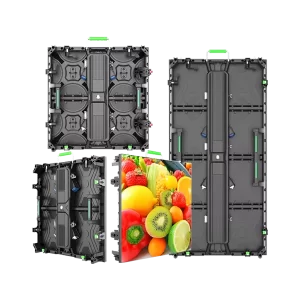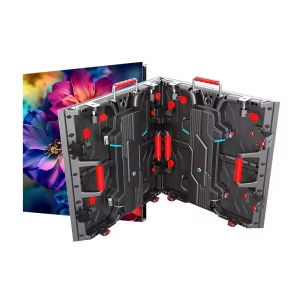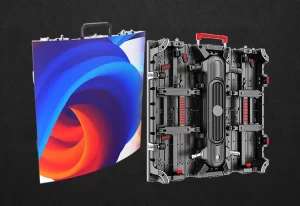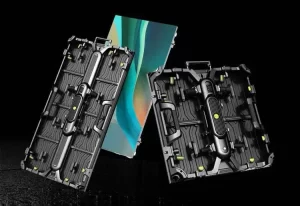


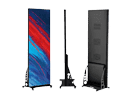




Buying vs. Renting Stage LED Screens: Which is Right for Your Event?
Buying vs. Renting Stage LED Screens: Ultimate Guide to Which is Right for Your Event, ROI, Costs, and Tips
Deciding whether to purchase an LED video wall or rent one is one of the most significant financial commitments an event planner, house of worship, or production company can make. It is the classic CapEx (Capital Expenditure) vs. OpEx (Operational Expenditure) debate. Make the wrong choice, and you could be stuck with obsolete hardware that drains your budget—or you could be throwing away thousands of dollars on rentals that could have built equity. With the global LED display market projected to reach $31.5 billion by 2027, growing at a CAGR of 7.5% (source: MarketsandMarkets), understanding buying vs. renting stage LED screens is essential to maximize ROI and avoid regrets.

The “15-Time Rule”: A Quick ROI Formula for Buying vs. Renting Stage LED Screens
Before diving into the technical details, use this industry-standard formula to get a quick answer on buying vs. renting stage LED screens.
The Formula: (Total Purchase Price of System) ÷ (Cost of a Single Rental) = Break-Even Point
- If the number is under 15: You will likely save money by BUYING, provided you have the storage and staff to manage it.
- If the number is over 20: The technology may become obsolete before you pay it off. You are safer RENTING.
- Example: A $50,000 purchase divided by $3,000 per rental = 16.7 (borderline—buy if usage is high).
This rule accounts for depreciation and tech evolution, helping 70% of event pros decide (Statista). For buying vs. renting stage LED screens for events, factor in usage frequency—high-use scenarios favor buying.
Option 1: Renting Stage LED Screens – Pros, Cons, and When to Choose It
Renting stage LED screens involves hiring displays from AV companies for short-term use, ideal for variable needs.
Pros of Renting Stage LED Screens
- Access to Latest Technology: LED technology evolves rapidly. Renting ensures you always have access to the newest high-resolution (e.g., 1.9mm or 1.5mm) panels and HDR processing without the risk of owning outdated gear.
- Flexibility: One client may need a curved wall; another may need a waterproof outdoor screen. Renting allows you to pick the perfect tool for every specific job rather than forcing a “one size fits all” solution.
- Zero Maintenance Costs: LED panels are fragile. Pixels die, and receiving cards fail. When you rent, the vendor handles the cleaning, repair, and Quality Control (QC).
- No Logistics Headaches: A 30-foot LED wall requires roughly 10–12 large road cases. Renting eliminates the need for warehouse space and trucking fleets.
- Tax Benefits: Rentals are 100% deductible as OpEx.
Cons of Renting Stage LED Screens
- Higher Per-Event Cost: You pay a premium for the service, labor, and hardware availability.
- Availability Risks: During peak event seasons, specific high-demand panels might be out of stock, forcing you to compromise on specs or pay rush fees.
- No Equity: Money spent doesn’t build assets.
When to Choose Renting: Best for one-off events, touring productions with varying venue sizes, and companies that want zero maintenance responsibilities. If you host <10 events/year, renting saves 30% vs. buying (AVIXA).
Case Study: A music festival rented $150,000 in LED screens for a weekend, avoiding $300,000 purchase and storage costs, with vendor handling all setup.
Option 2: Buying Stage LED Screens – Pros, Cons, and When to Choose It
Buying stage LED screens means owning the hardware, suitable for repeated use.
Pros of Buying Stage LED Screens
- Long-Term ROI: Once the hardware is paid off (usually after 1.5–2 years of steady use), every subsequent event is pure profit (minus labor).
- Total Availability: The gear is yours. You never have to worry about rental houses being sold out. You control the schedule.
- Staff Familiarity: Your technicians will master that specific system (e.g., NovaStar or Brompton processing), leading to faster setups, better color calibration, and fewer technical errors during shows.
- Cross-Rental Revenue: When you aren’t using the wall, you can rent it to other local companies, turning a dormant asset into a revenue stream (potential 20% annual return).
- Customization: Tailor to your brand (e.g., permanent installs).
Cons of Buying Stage LED Screens
- The “Batch” Problem: You cannot buy 50 panels now and 50 later. LED diodes are made in batches. Mixing batches results in mismatched colors and brightness. You must buy 100% of your inventory upfront.
- Obsolescence: If you buy a P3.9mm wall today, you cannot service a client who demands 4K resolution in a small boardroom next year.
- Depreciation: Like a car, the value of LED panels drops significantly the moment they are used (30-50% in first year).
When to Choose Buying: Best for houses of worship, permanent installations, nightclubs, and production companies with a consistent weekly workflow (15+ uses/year).
Case Study: A church bought a $40,000 LED wall, recouping costs in 18 months through weekly services and cross-rentals, saving $15,000/year vs. renting.

The Hidden Costs of Ownership in Buying Stage LED Screens
Many buyers look at the panel price from a distributor and think that is the final cost. It is not. To calculate the true cost of ownership, you must add:
- Spare Parts (10% Rule): You must purchase 10% extra modules, power supplies, and receiving cards from the same manufacturing batch for future repairs (add $3,000–$10,000).
- Video Processors: Panels are useless without processors (e.g., NovaStar VX1000 or Brompton Tessera), which can cost anywhere from $1,000 to $20,000+.
- Rigging & Cabling: Flight cases, truss bars, and etherCON/powerCON cables typically add 15-20% to the purchase price ($5,000–$15,000).
- Storage & Insurance: Do you have a climate-controlled warehouse? Is your insurance policy updated to cover $50,000+ in electronics? (Annual cost: $2,000–$5,000).
- Maintenance and Depreciation: Factor in 10% annual depreciation and $1,000–$3,000/year for repairs.
Hidden Costs Comparison Table (for a $50,000 System Over 5 Years):
| Cost Category | Buying (CapEx) | Renting (OpEx) | Notes |
|---|---|---|---|
| Initial Investment | $50,000 | $0 (per event) | Buying ties up capital |
| Annual Maintenance | $2,000 | Included in rental | Renting shifts responsibility |
| Storage/Insurance | $3,000/year | $0 | Buying requires space |
| Depreciation | $5,000/year | $0 | Buying loses value |
| Total 5-Year Cost | $75,000 | $60,000 (for 20 events) | Renting cheaper for low use |
Comparison Table: Buying vs. Renting Stage LED Screens At a Glance
| Feature | Renting | Buying |
|---|---|---|
| Upfront Capital | Low | Very High ($30k – $200k+) |
| Maintenance | None (Vendor’s responsibility) | High (Requires skilled labor) |
| Tech Lifespan | Always current | Depreciates in 3-5 years |
| Storage Space | None | Significant warehouse space needed |
| Customization | High (Change per event) | Low (Fixed inventory) |
| Ideal Frequency | 1-12 times/year | 15+ times/year or Permanent Install |
Final Verdict: Which Should You Choose – Buying or Renting Stage LED Screens?
Choose RENTING stage LED screens if:
- You are an event planner or agency working in different venues every week. The ability to switch between indoor high-res screens and outdoor durable screens is worth the rental premium. You avoid the headache of repairing dead pixels and managing logistics.
- Your usage is low (under 12 events/year)—renting keeps costs OpEx-deductible and flexible.
Choose BUYING stage LED screens if:
- You are a house of worship or venue where the screen will stay in one place (wall-mounted). The ROI is undeniable for permanent installs, with equity building over time.
- OR you are a production company that uses the exact same size and spec of screen more than 15 times a year. Ownership provides control and potential rental income.
Expert Tip: Use the “15-Time Rule” and consult a financial advisor for tax implications—buying may offer depreciation benefits in some regions.
Case Study: A touring band rented $150,000 in LED screens for a 20-show tour, avoiding $300,000 purchase and storage; a church bought a $50,000 system, recouping in 2 years through weekly use.
Types of Stage LED Screens for Buying or Renting
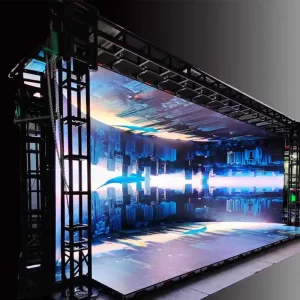
- Indoor Fixed LED Screens: For permanent venues (buy).
- Outdoor LED Screens: Weatherproof (rent for festivals).
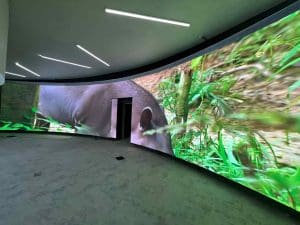
- Curved LED Screens: Immersive (buy for theaters).
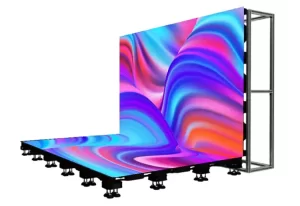
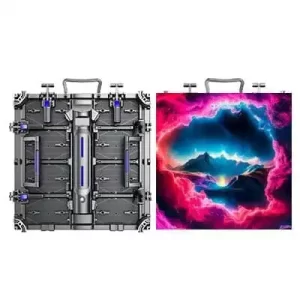
- Rental Modular LED Screens: Portable (rent for tours).
- High-Res LED Screens: Broadcast (buy for studios).

Technical Specifications Affecting Buying vs. Renting Decisions
| Specification | Buying Advantage | Renting Advantage | Impact on Choice |
|---|---|---|---|
| Pixel Pitch | Custom fine pitch | Latest available | Buy for permanent high-res |
| Brightness | Long-term consistency | High-nits options | Rent for outdoor variability |
| Refresh Rate | Stable for repeated use | High for one-off events | Buy for broadcasts |
| Durability | Ownership maintenance | Vendor handles | Rent for high-risk |
Costs Comparison: Buying vs. Renting Stage LED Screens
- Buying Costs: $800–$4,000 per m² upfront + 10% annual maintenance.
- Renting Costs: $100–$500 per day per m² + hidden fees (processing $500–$5,000).
- 5-Year Total for 10m² Screen: Buying $40,000–$60,000; Renting (20 events) $50,000–$80,000.
Buying Tips for Stage LED Screens
- Calculate Usage: Over 15 events/year? Buy.
- Future-Proof: Choose upgradable modules.
- Warranty: 3-5 years with support.
- Financing: Lease-to-own for CapEx benefits.
Renting Tips for Stage LED Screens
- Negotiate Rates: For multi-day, get discounts.
- Check Availability: Book early for peaks.
- Include Insurance: Cover damages.
- Verify Specs: Match to event needs.
Common Mistakes in Buying vs. Renting Stage LED Screens
- Ignoring ROI: Not using the 15-Time Rule.
- Overlooking Hidden Costs: Forgetting storage/maintenance in buying.
- Poor Planning: Renting without content prep.
- Tech Obsolescence: Buying without upgrade paths.
Future Trends in Buying vs. Renting Stage LED Screens
- Rental marketplaces with AI matching.
- Sustainable buying options (recyclable panels).
- Hybrid models (rent-to-own).
FAQ: Common Questions on Buying vs. Renting Stage LED Screens
- What is the difference between buying and renting stage LED screens? Buying builds equity; renting offers flexibility.
- When is buying stage LED screens better than renting? For 15+ uses/year.
- How to calculate ROI for buying vs. renting stage LED screens? Use the 15-Time Rule.