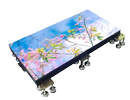


Latest Stage LED Display Screen Solutions
With the rapid advancement of technology, stage LED display solutions are constantly evolving to deliver more visually stunning and interactive experiences. Below are some of the latest stage LED display solutions and their key technologies:
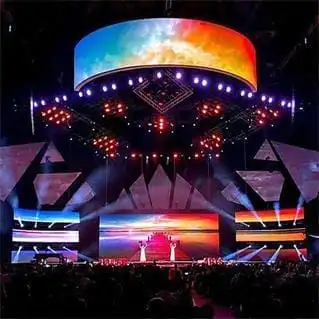
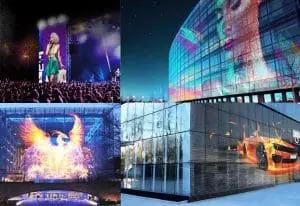
1. Glasses-Free 3D Stage LED Display Technology
- Features:
- Creates a glasses-free 3D effect through high resolution, precise pixel control, and multi-view design, offering an immersive experience for the audience.
- Commonly used in concerts, large-scale galas, and brand launches.
- Technical Requirements:
- Ultra-high refresh rate (≥3840Hz) and high grayscale levels (16-bit or above).
- Requires collaboration with professional content production teams to create 3D animation effects.
2. Interactive Stage LED Screens
- Features:
- The screen can sense the movements of the audience or performers and respond in real-time, achieving human-screen interaction.
- Interaction methods include touch sensing, motion capture, and infrared sensing.
- Application Scenarios:
- Performances, exhibitions, and event launch ceremonies.
- Technical Requirements:
- Equipped with pressure sensing modules or infrared sensors.
- High-performance processors to support real-time data computation and display.
3. Transparent Stage LED Screens
- Features:
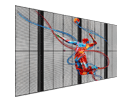
- Transparency rates of 50%-90%, allowing the screen to display content while maintaining visibility of the background. This enhances the depth and spatial perception of the stage without blocking lighting or background effects.
- Application Scenarios:
- Large concerts, fashion shows, exhibitions, etc.
- Technical Requirements:
- High brightness (≥5000 nits) to adapt to stage lighting.
- Lightweight design for easy installation and dismantling.
4. Flexible LED Displays
- Features:
- Flexible design allows screens to bend, fold, or roll up, suitable for irregular stage setups.
- Commonly used to create wave shapes, cylindrical screens, or spherical designs for creative stage layouts.
- Application Scenarios:
- Creative stages, artistic performances, and event installations.
- Technical Requirements:
- Ultra-lightweight design for easy transportation.
- High reliability and durability to withstand repeated folding and unfolding.
5. LED Floor Displays
- Features:
- LED panels are installed on the stage floor, supporting performers or props to step on them, while synchronizing with other LED screens to display content.
- Floor displays are pressure-resistant, anti-slip, and have high protection ratings (IP65 or above).
- Application Scenarios:
- Stage shows, music festivals, and immersive experience events.
- Technical Requirements:
- High durability to withstand pressure and scratches.
- Pressure sensing or interactive technology for enhanced interaction.
6. Ultra-HD 4K/8K Stage LED Displays
- Features:
- Extremely high resolution, suitable for large stage background screens, showcasing fine details and vivid images.
- Combined with HDR technology to enhance contrast and color performance.
- Application Scenarios:
- High-end performances, large-scale product launches, and live TV broadcasts.
- Technical Requirements:
- Smaller pixel pitches (e.g., P1.2, P1.5).
- Equipped with high-bandwidth signal processing devices.
7. Curved LED Displays
- Features:
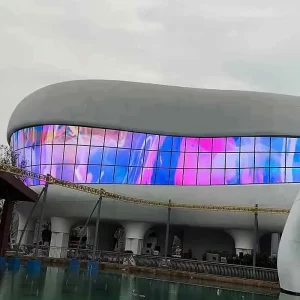
- Screens can be customized to curve based on stage design, creating panoramic immersive experiences.
- Combined with surround sound systems for a dual sensory impact of visuals and audio.
- Application Scenarios:
- Large immersive performances, corporate events, and themed activities.
- Technical Requirements:
- Seamless splicing technology to ensure smooth curved display effects.
- Support for High Dynamic Range (HDR) and wide color gamut.
8. Immersive XR Virtual Stage LED Displays
- Features:
- Combines LED displays, real-time rendering technologies (e.g., Unreal Engine), and camera tracking to merge virtual and real-world scenes.
- Replaces traditional green screens, delivering more realistic virtual environments in real time.
- Application Scenarios:
- Film production, live streaming, and virtual concerts.
- Technical Requirements:
- Ultra-high refresh rate and low-latency LED displays.
- Powerful graphics processing capabilities to support real-time rendering.
9. Modular Quick Assembly Design
- Features:
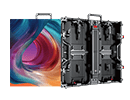
- Modular design allows for quick assembly and disassembly of screens, meeting the needs of frequent stage setups.
- Saves on-site installation time and improves efficiency.
- Technical Requirements:
- Lightweight cabinet with quick-lock mechanisms.
- Support for front and rear maintenance for convenient repairs.
10. Wireless Control and Remote Management
- Features:
- Wireless technologies (e.g., Wi-Fi or 4G/5G) enable remote content updates and screen control.
- Allows quick switching of display content or adjustment of screen parameters.
- Application Scenarios:
- Temporary performances, touring concerts, etc.
- Technical Requirements:
- Stable wireless connections with secure encryption.
- Support for multi-screen synchronization and remote debugging.
Conclusion
The latest stage LED display solutions focus on higher resolution, stronger interactivity, and more flexible creative designs. By integrating transparent screens, flexible displays, interactive technologies, and XR virtual technologies, stage LED displays have surpassed traditional display functions and become a vital part of stage art. Choosing the right solution requires considering the stage scenario, budget, and technical requirements comprehensively.